Collection › China › #122
10 Yuan CNY
P-P-329
AI extracted
✦ AI 95%
The AI flagged these for your attention. Use ✦ Fact-check to cross-check factual fields against another model's world-knowledge, or 🔍 Re-look at image when you suspect the AI misread the pixels.
-
Some fields the AI was unsure about — please verify:
- Printer: “—” (0%)
Click ✦ Ask AI to verify or fix any below.
IMG_6293.jpeg
cropped
IMG_6294.jpeg
cropped
Where & when
What's on the note
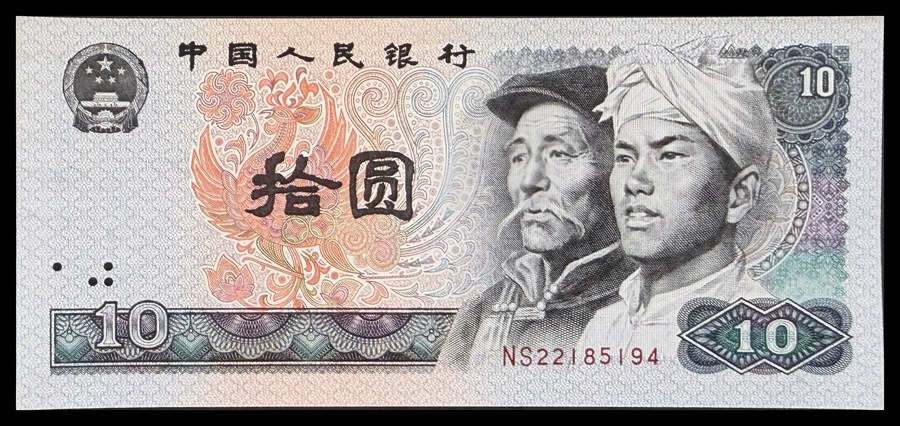
Front: Portraits of a Han Chinese man and a Mongol man representing China's ethnic diversity. The Fourth series renminbi (1987–2018) was the first to feature portraits of ethnic minorities rather than political leaders, symbolizing national unity and the multi-ethnic character of the People's Republic. Each denomination depicts different ethnic groups from China's officially recognized 56 nationalities, emphasizing cultural harmony and socialist inclusiveness.
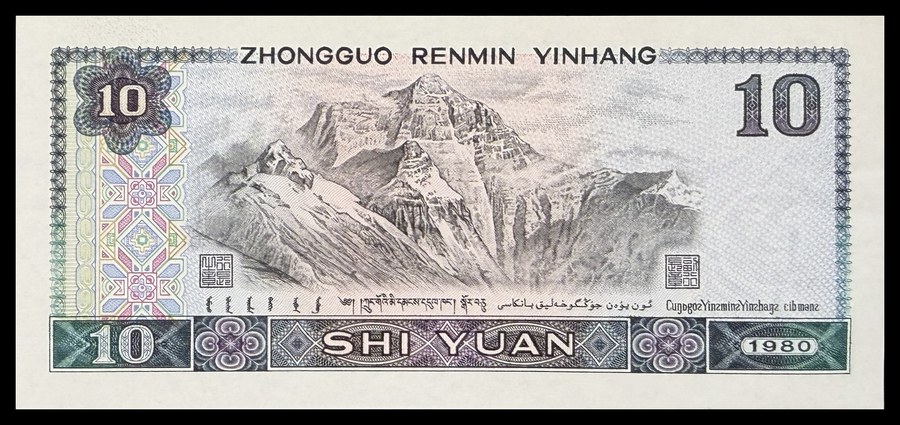
Back: Mount Everest (Chomolungma/Sagarmatha), the world's highest peak at 8,848 metres, located on the China-Nepal border in the Himalayas. Known in Tibetan as Chomolungma ('Goddess Mother of the World') and measured from the Chinese side, Everest has been a symbol of China's territorial extent and natural majesty. The mountain appears on this denomination as part of the Fourth series' theme of showcasing China's diverse landscapes and natural wonders.
How it was made
Security features: thread,microprint,intaglio,see_through_register
China in Asia
China in Asia. Other countries on the same continent shown in muted grey.
Background & history
The Fourth series renminbi was issued between 1987 and 1997 (dates printed 1980, 1990, 1996) and circulated until full demonetization on May 1, 2019. This series marked a significant shift in Chinese banknote design philosophy, replacing portraits of political figures with depictions of China's ethnic minorities and natural landscapes. The 10 yuan note specifically features Han and Mongol representatives on the obverse and Mount Everest on the reverse. The text includes Chinese, Mongolian, Tibetan, Uyghur, and Zhuang scripts, reflecting the multilingual nature of the People's Republic. This series coincided with China's economic reforms and opening-up period under Deng Xiaoping.
Collector references
How it came to me
What it's worth now
Valuation history (1)
| date | low | high | currency | source | note |
|---|---|---|---|---|---|
| 2026-05-08 16:37:19 | 3.0 | 10.0 | USD | ai | from claude-sonnet-4-5 |
History & extractions
AI extractions (1)
Edits & decisions (0)
No edits yet.
Manual fixups
Find near-duplicates
Manual pairing override
Edit specimen #122
All fields below post to the same save endpoint. Sections collapse to focus on what you need.
Re-crop manually
Drag the four corners to mark the banknote in each image. Click Save crop to apply.