Collection › Greece › #238
20 Drachma
P-315
Needs review
✦ AI 85%
The AI flagged these for your attention. Use ✦ Fact-check to cross-check factual fields against another model's world-knowledge, or 🔍 Re-look at image when you suspect the AI misread the pixels.
-
The photo is blurry.Mark Retake — re-photograph in better focus.
-
Lighting is too dim for confident reading.Mark Retake — re-photograph with more light.
-
Some fields the AI was unsure about — please verify:
- Watermark: “None visible” (60%)
Click ✦ Ask AI to verify or fix any below. -
Overall AI confidence is 85% (auto-approve threshold is 92%).Skim the Identity tab; the dots next to each field show what the AI was unsure about.
IMG_6525.jpeg
cropped
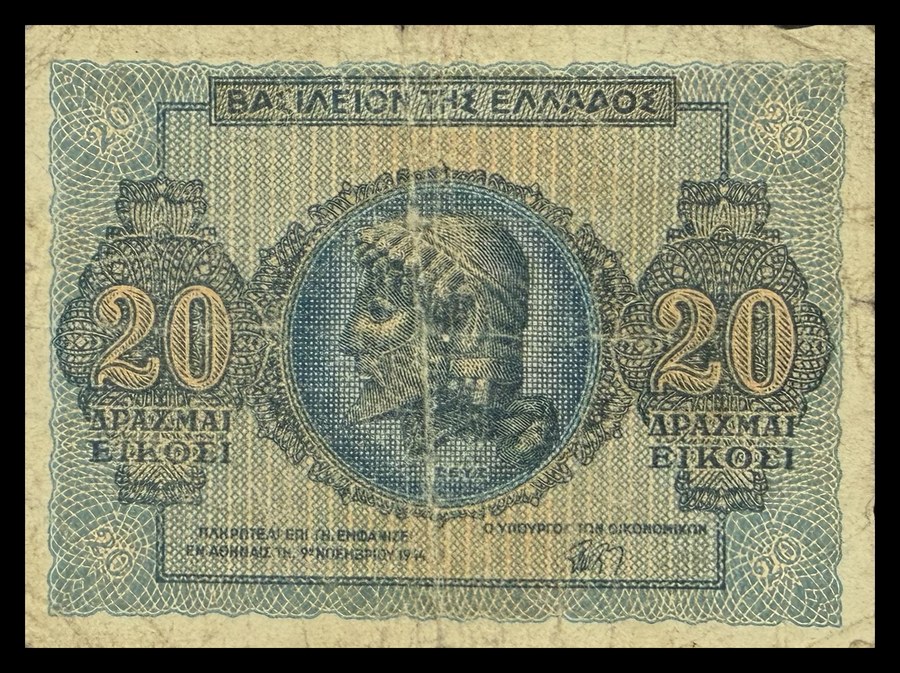
IMG_6526.jpeg
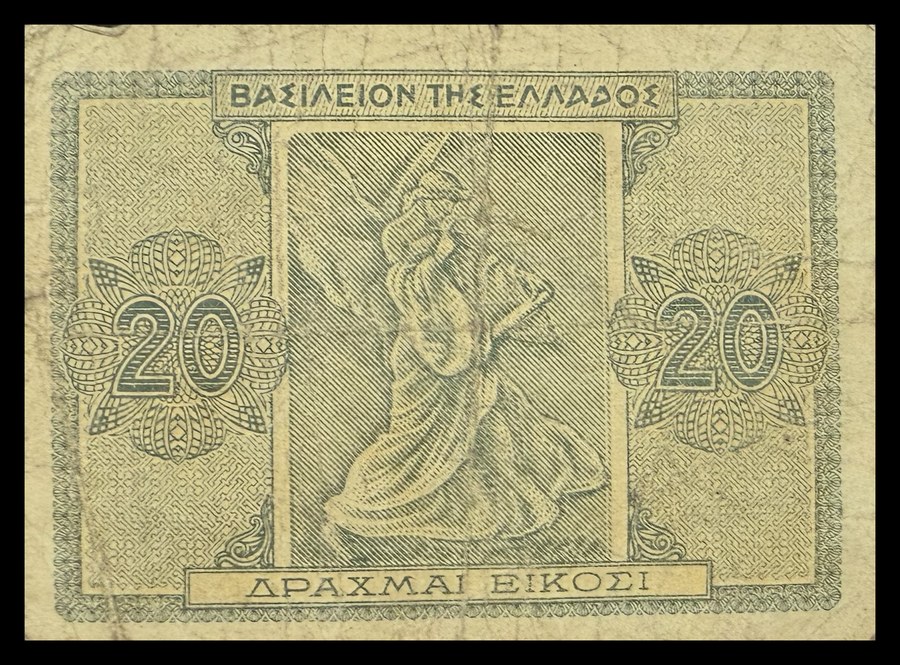
cropped
Where & when
What's on the note
Front: Athena, the ancient Greek goddess of wisdom, warfare, and patron deity of Athens, depicted in profile wearing her characteristic crested helmet. Athena was the most revered deity of Athens and appears frequently on Greek currency as a symbol of wisdom, strength, and Hellenic cultural heritage. The note features ornate guilloche patterns and the denomination '20 ΔΡΑΧΜΑΙ ΕΙΚΟΣΙ' (20 Drachmai Twenty) flanking the goddess.
Back: A seated classical Greek figure, likely representing an artisan or potter, working with ceramic vessels—symbolizing Greek craftsmanship and the nation's ancient cultural achievements in pottery and ceramics. The scene evokes Greece's renowned tradition of pottery-making from antiquity, when Greek ceramic art was traded throughout the Mediterranean. The text 'ΔΡΑΧΜΑΙ ΕΙΚΟΣΙ' (Drachmai Twenty) appears at the bottom.
How it was made
Signatures: Governor: Emmanouil Tsouderos; Minister of Finance
Security features: guilloche_patterns,microprint
Greece in Europe
Greece in Europe. Other countries on the same continent shown in muted grey.
Background & history
This 20 Drachma note was issued during WWII by the Bank of Greece during the Axis occupation period (1940–1944). The series circulated during one of the most difficult periods in modern Greek history, marked by severe economic disruption, inflation, and hardship under German, Italian, and Bulgarian occupation. These wartime issues were eventually withdrawn and replaced as Greece stabilized its currency after liberation in 1944. The design draws heavily on classical Greek iconography to assert national identity during occupation.
Collector references
How it came to me
Heavy circulation wear, staining, and discoloration throughout. Note shows significant aging with visible creasing and possible water damage or environmental exposure.
What it's worth now
Valuation history (1)
| date | low | high | currency | source | note |
|---|---|---|---|---|---|
| 2026-05-08 17:24:12 | 3.0 | 10.0 | USD | ai | from claude-sonnet-4-5 |
History & extractions
AI extractions (2)
Edits & decisions (0)
No edits yet.
Manual fixups
Find near-duplicates
Manual pairing override
Edit specimen #238
All fields below post to the same save endpoint. Sections collapse to focus on what you need.
Re-crop manually
Drag the four corners to mark the banknote in each image. Click Save crop to apply.