Collection › Afghanistan › #3
1 AFN
P-64
Needs review
✦ AI 88%
The AI flagged these for your attention. Use ✦ Fact-check to cross-check factual fields against another model's world-knowledge, or 🔍 Re-look at image when you suspect the AI misread the pixels.
-
Some fields the AI was unsure about — please verify:
- Issue year: “—” (0%)
- Printer: “—” (0%)
- Watermark: “—” (0%)
- Front portrait: “—” (0%)
Click ✦ Ask AI to verify or fix any below. -
Overall AI confidence is 88% (auto-approve threshold is 92%).Skim the Identity tab; the dots next to each field show what the AI was unsure about.
IMG_6030.HEIC
cropped
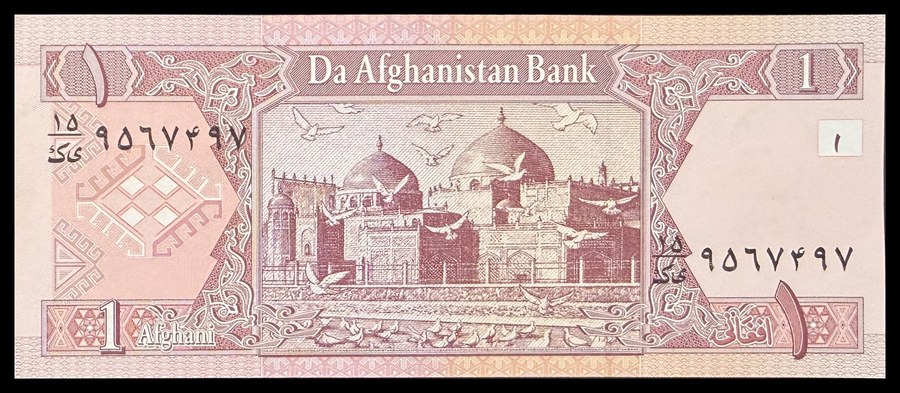
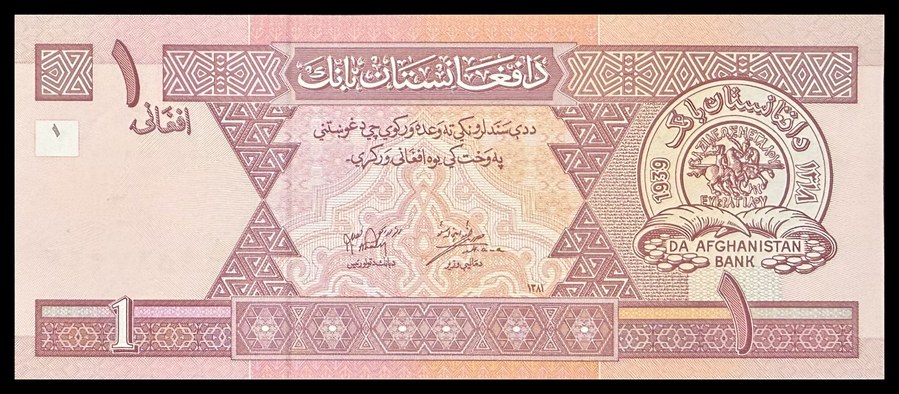
IMG_6031.HEIC
cropped
Where & when
What's on the note
Front: Mausoleum of King Habibullah Kalakani (also known as Mausoleum of Bacha-i-Saqao) in Kabul, Afghanistan. This shrine with its distinctive domes represents Islamic architecture and is a historically significant religious structure in Kabul. The mausoleum honors Habibullah Kalakani, who briefly ruled Afghanistan in 1929. The building features characteristic Central Asian Islamic architectural elements including multiple domes, minarets, and ornate details. This note was issued by Da Afghanistan Bank during the transitional period following the fall of the Taliban regime.
Back: National emblem of Afghanistan (1992–2004 variant) featuring a mosque with mihrab and minbar at center, flanked by wheat sheaves, with the national motto inscribed above in Persian script. The emblem includes the takbir 'Allahu Akbar' (God is Great) and the hijri year 1298 (1919 CE, marking Afghan independence). This version of the emblem was used during the Islamic State of Afghanistan period. The design incorporates geometric patterns characteristic of Islamic decorative art.
How it was made
Signatures: Governor: Anwar ul-Haq Ahady; Minister of Finance: Ashraf Ghani
Security features: geometric_patterns,microprint
Afghanistan in Asia
Afghanistan in Asia. Other countries on the same continent shown in muted grey.
Background & history
This 1 Afghani note belongs to the SH1381 (2002 CE) series issued by Da Afghanistan Bank following the establishment of the Transitional Islamic State of Afghanistan after the fall of the Taliban in 2001. The solar hijri year 1381 corresponds to 2002–2003 CE. This series represented the restoration of the pre-Taliban currency system and was part of Afghanistan's monetary stabilization efforts under international assistance. The series was short-lived, as a currency reform in 2002 (effective 2003) introduced the New Afghani at a rate of 1 New Afghani = 1000 old Afghanis. These notes circulated during a critical transitional period in Afghan history.
Collector references
How it came to me
What it's worth now
Valuation history (1)
| date | low | high | currency | source | note |
|---|---|---|---|---|---|
| 2026-05-08 08:11:30 | 1.0 | 3.0 | USD | ai | claude-sonnet-4-5: Afghanistan P-64 1 Afghani SH1381 (2002) is a common modern issue widely available in UNC condition at minimal premium over face value. |
History & extractions
AI extractions (3)
Edits & decisions (1)
Manual fixups
Find near-duplicates
Manual pairing override
Edit specimen #3
All fields below post to the same save endpoint. Sections collapse to focus on what you need.
Re-crop manually
Drag the four corners to mark the banknote in each image. Click Save crop to apply.