Collection › Laos › #329
1 Kip
P-1
AI extracted
✦ AI 92%
The AI flagged these for your attention. Use ✦ Fact-check to cross-check factual fields against another model's world-knowledge, or 🔍 Re-look at image when you suspect the AI misread the pixels.
-
Some fields the AI was unsure about — please verify:
- Series year: “—” (0%)
- Issue year: “—” (0%)
- Printer: “—” (0%)
- Dimensions (mm): “—” (0%)
- Watermark: “—” (0%)
Click ✦ Ask AI to verify or fix any below.
IMG_6788.jpeg
cropped
IMG_6789.jpeg
cropped
Where & when
What's on the note
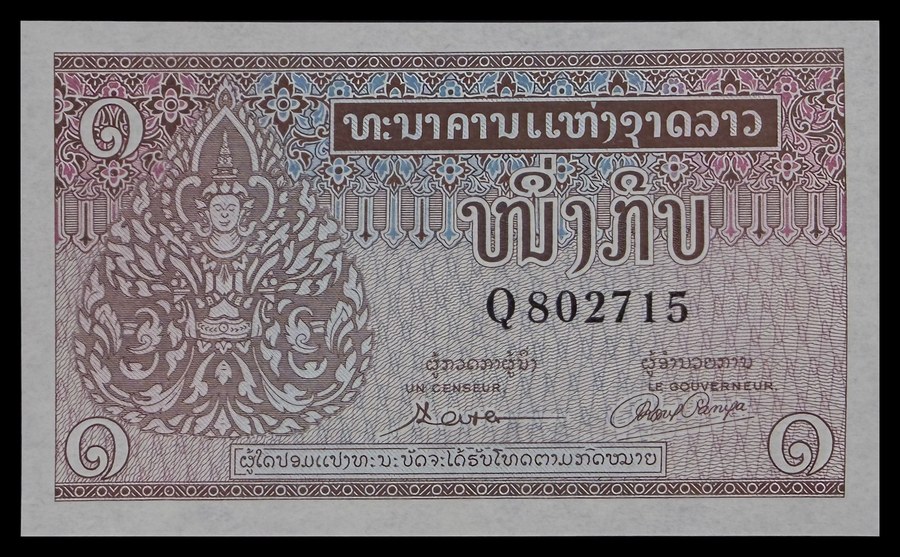
Front: Erawan, the three-headed white elephant from Hindu-Buddhist mythology, which serves as the royal symbol of Laos and appears on the national coat of arms. The elephant is depicted with elaborate decorative elements including a multi-tiered parasol (royal umbrella) above, symbolizing sovereignty and protection. Erawan represents power, wisdom, and the divine right of kingship in Lao culture, and was the central emblem of the Kingdom of Laos during the period this note was issued.
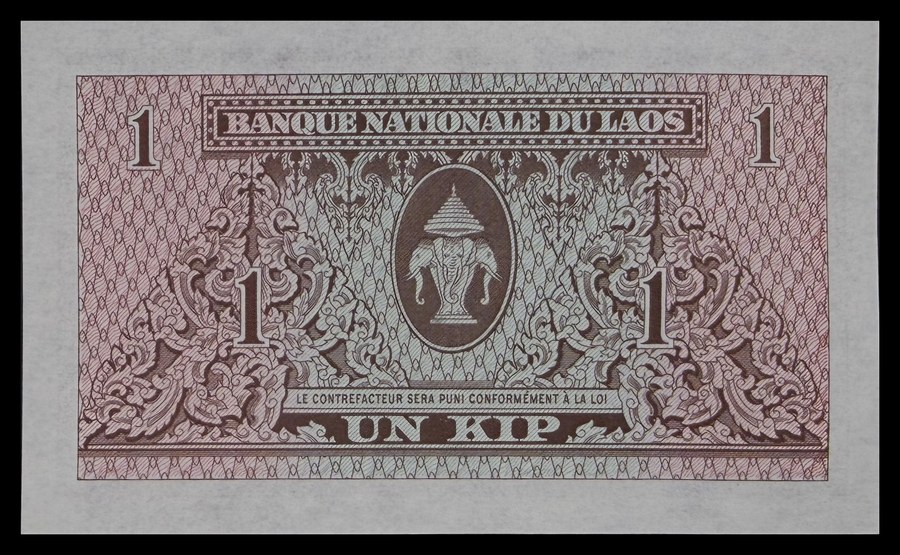
Back: Erawan (three-headed elephant) centered within an oval medallion, surmounted by a tiered parasol and flanked by ornate decorative scrollwork. The elephant symbol reinforces the royal authority and Buddhist-Hindu cultural heritage of Laos. The inscription 'LE CONTREFACTEUR SERA PUNI CONFORMÉMENT À LA LOI' (The counterfeiter will be punished in accordance with the law) appears at the bottom.
How it was made
Signatures: UN CENSEUR: Novia; LE GOUVERNEUR: [illegible signature]
Security features: intaglio,guilloche
Laos in Asia
Laos in Asia. Other countries on the same continent shown in muted grey.
Background & history
This note belongs to the first Kip series issued by the Banque Nationale du Laos following independence from France. The Royal Kip was introduced in 1952 to replace the French Indochinese piastre, establishing monetary sovereignty for the newly independent Kingdom of Laos. This 1 Kip denomination features bilingual text in Lao and French, reflecting the transitional period from French colonial rule. The series was demonetized in 1963 when the second Kip series was introduced amid economic and political instability during the early years of the Laotian Civil War.
Collector references
How it came to me
Note shows moderate circulation with visible fold marks and some discoloration, but text and imagery remain clear
What it's worth now
Valuation history (1)
| date | low | high | currency | source | note |
|---|---|---|---|---|---|
| 2026-05-08 17:43:35 | 15.0 | 40.0 | USD | ai | from claude-sonnet-4-5 |
History & extractions
AI extractions (1)
Edits & decisions (1)
Manual fixups
Find near-duplicates
Manual pairing override
Edit specimen #329
All fields below post to the same save endpoint. Sections collapse to focus on what you need.
Re-crop manually
Drag the four corners to mark the banknote in each image. Click Save crop to apply.