Collection › Peru › #456
500 Intis (front) / 20 Pesos (back) Peruvian Inti
The AI flagged these for your attention. Use ✦ Fact-check to cross-check factual fields against another model's world-knowledge, or 🔍 Re-look at image when you suspect the AI misread the pixels.
-
Front and back images may not belong to the same note.Use 'Swap back with previous/next specimen' below — usually fixes a two-pair shuffle from photographing them out of order.
-
Overall AI confidence is 60% (auto-approve threshold is 92%).Skim the Identity tab; the dots next to each field show what the AI was unsure about.
-
Some fields the AI was unsure about — please verify:
- Series name: “—” (0%)
- Series year: “—” (0%)
- Issue year: “—” (0%)
- Dimensions (mm): “—” (0%)
- Front portrait: “—” (0%)
- Pick #: “—” (0%)
- …and 2 more
Click ✦ Ask AI to verify or fix any below. -
Models disagreed on back_description.Inspect the value on the Identity tab and pick the right one, or Ask AI to verify.
-
Models disagreed on color_palette.Inspect the value on the Identity tab and pick the right one, or Ask AI to verify.
-
Models disagreed on Denomination.Inspect the value on the Identity tab and pick the right one, or Ask AI to verify.
-
Models disagreed on front_description.Inspect the value on the Identity tab and pick the right one, or Ask AI to verify.
-
Models disagreed on historical_notes.Inspect the value on the Identity tab and pick the right one, or Ask AI to verify.
-
Models disagreed on Issuer.Inspect the value on the Identity tab and pick the right one, or Ask AI to verify.
-
Models disagreed on languages.Inspect the value on the Identity tab and pick the right one, or Ask AI to verify.
-
Models disagreed on Printer.Inspect the value on the Identity tab and pick the right one, or Ask AI to verify.
-
Models disagreed on security_features.Inspect the value on the Identity tab and pick the right one, or Ask AI to verify.
-
Models disagreed on Themes.Inspect the value on the Identity tab and pick the right one, or Ask AI to verify.
IMG_7106.HEIC
cropped
IMG_7107.HEIC
cropped
Where & when
What's on the note
Front: Andean mountain scene depicting traditional highland agriculture in Peru, with snow-capped peaks (likely Cordillera Blanca or similar Andean range), terraced fields, livestock (llamas or alpacas), and indigenous farmers working the land. The imagery represents the agricultural heritage and indigenous culture of the Peruvian highlands. The denomination '500 INTIS' is prominent, issued by the Banco Central de Reserva del Perú. The Inti was Peru's currency from 1985–1991, replacing the Sol de Oro during a period of severe hyperinflation. The stylized Pre-Columbian deity motif at upper left reflects Peru's rich archaeological heritage.
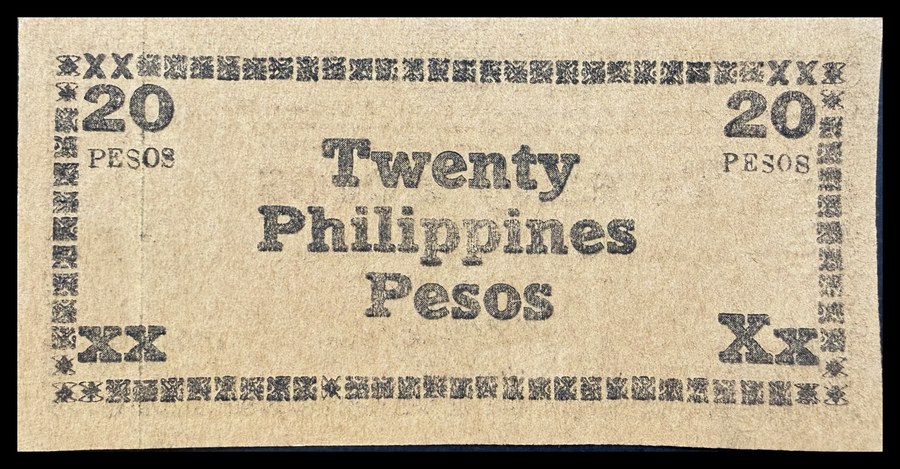
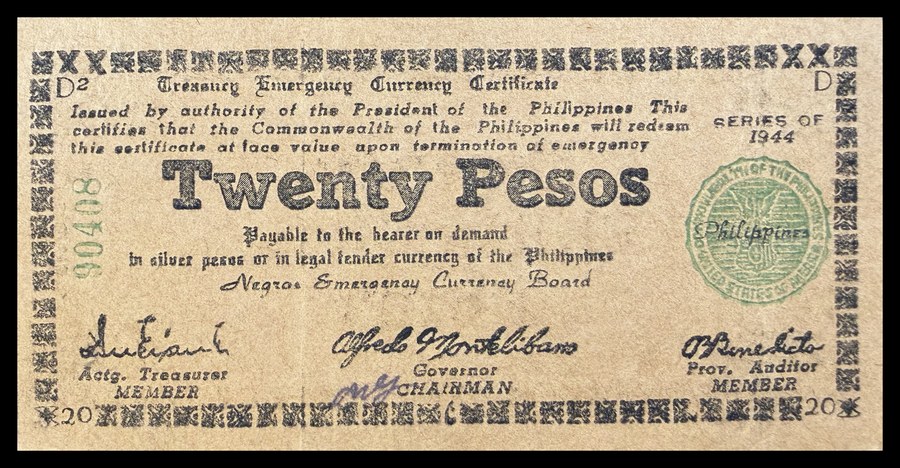
Back: Text reading 'Twenty Philippines Pesos' with '20 PESOS' denominations in corners and decorative border pattern. This reverse does NOT match the Peruvian Inti note shown on the front — it appears to be from a Philippine 20 Pesos emergency or guerrilla currency note, likely from the Japanese Occupation period (1942–1945) or a similar emergency issue. The simple typography and basic printing are characteristic of wartime emergency currency.
How it was made
Security features: microprint,intaglio
Peru in South America
Peru in South America. Other countries on the same continent shown in muted grey.
Background & history
MISMATCHED PAIR: The front and back images do NOT belong to the same banknote. The front is a Peruvian 500 Intis note from the Inti series (1985–1991), which replaced the Sol de Oro at 1,000:1 during hyperinflation and was itself replaced by the Nuevo Sol in 1991. The Inti notes featured Andean cultural and agricultural themes. The back image is a Philippine 20 Pesos note, most likely emergency currency from WWII Japanese Occupation (1942–1945) or similar period, characterized by simple printing and basic security features. These two notes are from entirely different countries, currencies, and historical periods. No serial number is visible on either image. Printer marking 'Bundesdruckerei' on front indicates German printing.
Collector references
How it came to me
What it's worth now
No current value set. Use Edit to add one, or run "Value all" on the collection page.
History & extractions
AI extractions (3)
Edits & decisions (0)
No edits yet.
Manual fixups
Find near-duplicates
Manual pairing override
Edit specimen #456
All fields below post to the same save endpoint. Sections collapse to focus on what you need.
Re-crop manually
Drag the four corners to mark the banknote in each image. Click Save crop to apply.