Collection › Philippines › #459
2 Piso PHP
The AI flagged these for your attention. Use ✦ Fact-check to cross-check factual fields against another model's world-knowledge, or 🔍 Re-look at image when you suspect the AI misread the pixels.
-
Front and back images may not belong to the same note.Use 'Swap back with previous/next specimen' below — usually fixes a two-pair shuffle from photographing them out of order.
-
Overall AI confidence is 50% (auto-approve threshold is 92%).Skim the Identity tab; the dots next to each field show what the AI was unsure about.
-
Some fields the AI was unsure about — please verify:
- Country: “Philippines” (0%)
- Currency: “PHP” (0%)
- Denomination: “2 Piso” (0%)
- Series name: “Ang Bagong Lipunan Series” (0%)
- Series year: “—” (0%)
- Issue year: “—” (0%)
- …and 9 more
Click ✦ Ask AI to verify or fix any below. -
The photo is blurry.Mark Retake — re-photograph in better focus.
-
Lighting is too dim for confident reading.Mark Retake — re-photograph with more light.
IMG_7112.HEIC
cropped
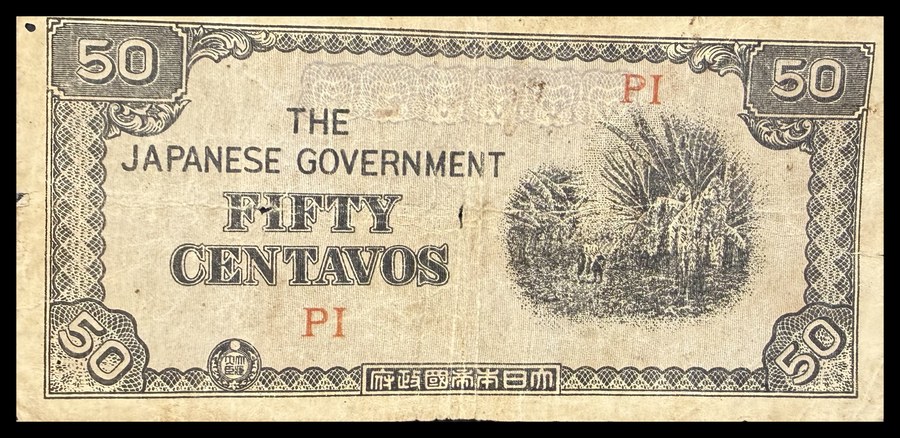
IMG_7113.HEIC
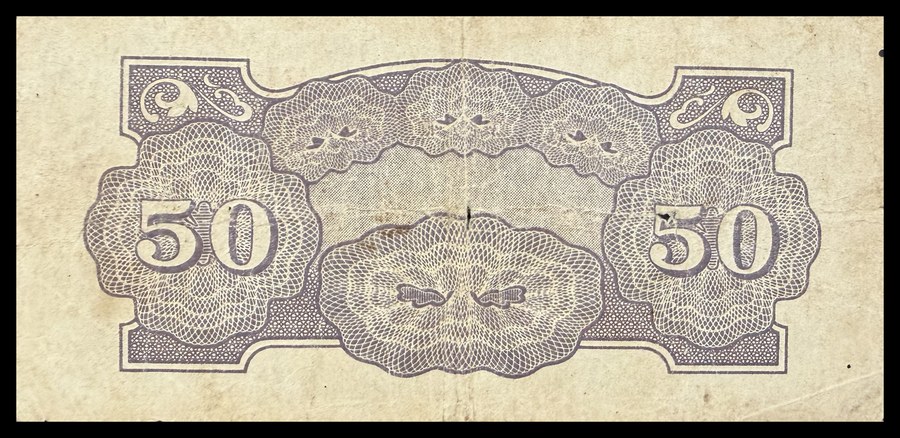
cropped
Where & when
What's on the note
Front: The Balconahe ng Mangunsong Aguinaldo (Balcony of Emilio Aguinaldo's house), depicting the historic moment when the independence of the Philippines was proclaimed on June 12, 1898. The note's inscription reads 'PAHAYAG NG KASARINLAN NG PILIPINAS NOONG HUNYO 12, 1898 (BALKONAHE NG MANSIONG AGUINALDO)', commemorating the centennial of Philippine independence. The scene shows figures on the iconic balcony in Kawit, Cavite, where Aguinaldo declared freedom from Spanish colonial rule, a pivotal moment in Philippine history that established the First Philippine Republic.
Back: Japanese Government-issued occupation currency overprint reading 'THE JAPANESE GOVERNMENT FIFTY CENTAVOS' with 'PI' markings, depicting tropical vegetation including palm trees and other Philippine flora. This represents Japanese-issued invasion money (JIM) circulated during the occupation of the Philippines from 1942-1945 during World War II. The overprint on Philippine currency was part of Japan's wartime monetary control, which led to severe hyperinflation and economic disruption. These notes became worthless after liberation and are historical artifacts of the wartime occupation period.
How it was made
Security features: microprint,intaglio
Philippines in Asia
Philippines in Asia. Other countries on the same continent shown in muted grey.
Background & history
🎉 Commemorating Centennial of the Cry of Pugad Lawin 1896-1996.
This is a mismatched pair. The front is from a 2-Peso note from the Ang Bagong Lipunan series issued by the Central Bank of the Philippines (later Bangko Sentral ng Pilipinas) between 1973-1985, specifically a commemorative design celebrating the centennial of the proclamation of Philippine independence (1896-1996). The back, however, shows a Japanese occupation 50-centavo note from World War II (1942-1945), part of the invasion money issued during Japan's military occupation. These two notes are from completely different historical periods and issuers and do not form a legitimate front-back pair. The Philippine independence centennial series was issued in the 1990s, while the Japanese occupation currency was issued during WWII. The condition of both appears to be circulated with visible wear and staining.
Collector references
How it came to me
Visible staining, wear, and discoloration on both pieces; edges show handling wear; surfaces have dirt accumulation
What it's worth now
No current value set. Use Edit to add one, or run "Value all" on the collection page.
History & extractions
AI extractions (2)
Edits & decisions (0)
No edits yet.
Manual fixups
Find near-duplicates
Manual pairing override
Edit specimen #459
All fields below post to the same save endpoint. Sections collapse to focus on what you need.
Re-crop manually
Drag the four corners to mark the banknote in each image. Click Save crop to apply.