Collection › Venezuela › #622
5 VEF
P-89
Needs review
✦ AI 90%
The AI flagged these for your attention. Use ✦ Fact-check to cross-check factual fields against another model's world-knowledge, or 🔍 Re-look at image when you suspect the AI misread the pixels.
-
Some fields the AI was unsure about — please verify:
- Printer: “—” (40%)
- Issue year: “2007” (50%)
- Watermark: “Portrait of Pedro Camejo in clear field” (50%)
Click ✦ Ask AI to verify or fix any below. -
Overall AI confidence is 90% (auto-approve threshold is 92%).Skim the Identity tab; the dots next to each field show what the AI was unsure about.
IMG_7441.HEIC
cropped
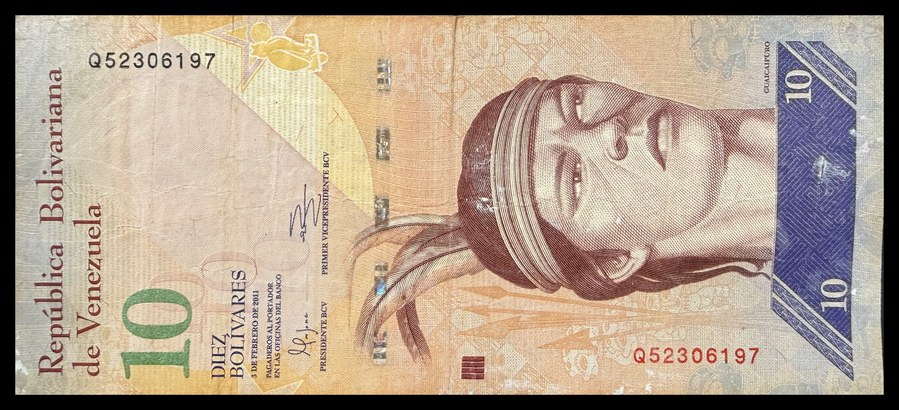
IMG_7442.HEIC
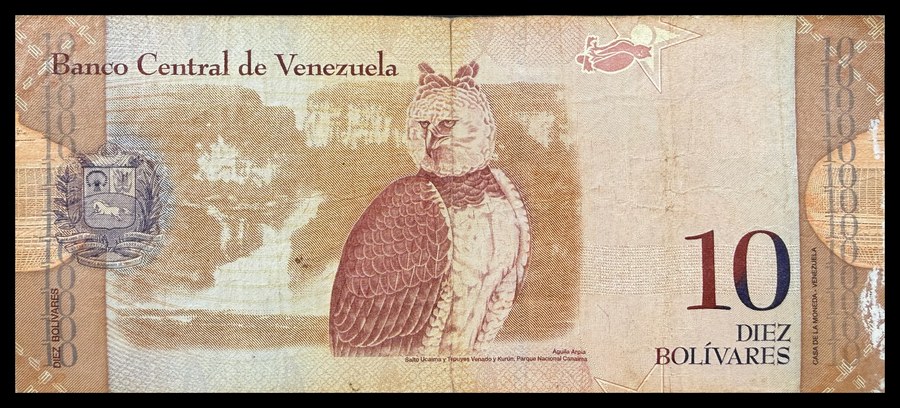
cropped
Where & when
What's on the note
Front: Pedro Camejo (c. 1790–1821), known as 'Negro Primero' ('The First Black'), a Venezuelan llanero of indigenous and African descent who served as a soldier in Simón Bolívar's army during the Wars of Independence. He is celebrated as a national hero for his bravery at the Battle of Carabobo (1821) where he was mortally wounded; his legendary last words to General José Antonio Páez—'I came to tell you goodbye, because I am dead'—made him an enduring symbol of Afro-Venezuelan and indigenous contributions to independence. The front also features the Venezuelan coat of arms at left and the text 'Parque Nacional Henri Pittier - Valle de Aragua' near the center.
Back: Sabana de Arauca, the vast tropical grassland plains (llanos) of the Arauca River region in western Venezuela, a landscape central to Venezuelan identity and llanero culture. The back depicts stylised imagery of the llanos flora, including palm trees and native vegetation, symbolising the natural heritage and agricultural importance of the plains. The number '2' appears prominently, along with the text 'República Bolivariana de Venezuela' and 'DOS BOLÍVARES'.
How it was made
Security features: thread, microprint, intaglio, see_through_register, latent_image
Venezuela in South America
Venezuela in South America. Other countries on the same continent shown in muted grey.
Background & history
This note belongs to the Bolívar Fuerte ('Strong Bolívar') series introduced on 1 January 2008 as part of a monetary reform that redenominated the Venezuelan bolívar at a rate of 1,000:1 (removing three zeros from the old bolívar). The reform aimed to simplify transactions amid inflation. The series was issued 2007–2018 and featured Venezuelan independence heroes and natural landmarks. Pedro Camejo, an Afro-indigenous llanero who fought at Carabobo, was chosen for the 5 bolívares note to honour marginalised communities' role in independence. Henri Pittier National Park (Valle de Aragua), referenced on the front, is Venezuela's oldest national park (1937). The Bolívar Fuerte was replaced by the Bolívar Soberano on 20 August 2018 at a rate of 100,000:1 as hyperinflation rendered the currency unworkable. Serial number F87796418 visible on the back; no documented serial-year encoding identified for Venezuelan notes.
Collector references
How it came to me
Note shows moderate circulation wear with visible creases and handling marks but retains overall integrity
What it's worth now
Valuation history (1)
| date | low | high | currency | source | note |
|---|---|---|---|---|---|
| 2026-05-10 07:38:42 | 1.0 | 3.0 | USD | ai | from claude-sonnet-4-5 |
History & extractions
AI extractions (1)
Edits & decisions (0)
No edits yet.
Manual fixups
Find near-duplicates
Manual pairing override
Edit specimen #622
All fields below post to the same save endpoint. Sections collapse to focus on what you need.
Re-crop manually
Drag the four corners to mark the banknote in each image. Click Save crop to apply.