Collection › Yugoslavia › #645
500 dinara Yugoslav dinar
P-92a
Needs review
✦ AI 90%
The AI flagged these for your attention. Use ✦ Fact-check to cross-check factual fields against another model's world-knowledge, or 🔍 Re-look at image when you suspect the AI misread the pixels.
-
Overall AI confidence is 90% (auto-approve threshold is 92%).Skim the Identity tab; the dots next to each field show what the AI was unsure about.
IMG_7487.HEIC
cropped
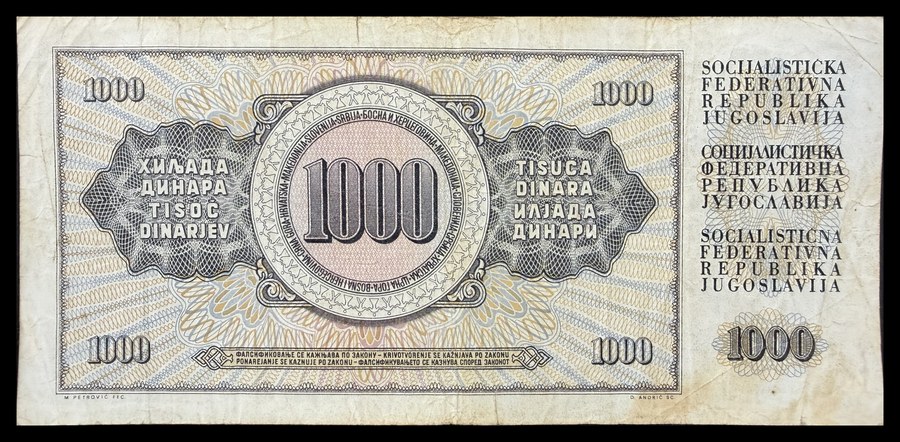
IMG_7488.HEIC
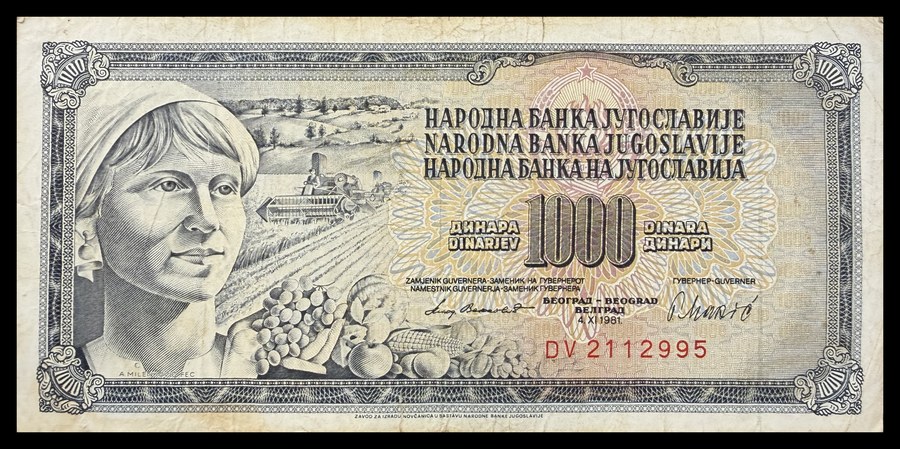
cropped
Where & when
What's on the note
Front: A woman in traditional Yugoslav folk costume with distinctive headwear, representing the cultural heritage of the South Slavic peoples. The figure symbolizes the unity and diversity of Yugoslavia's constituent republics and ethnic groups during the socialist federal period. The note displays trilingual text in Latin and Cyrillic scripts (Serbo-Croatian, Macedonian, Slovenian), reflecting Yugoslavia's multilingual character. Dated 4. XI 1981 (November 4, 1981) and issued in Belgrade (Beograd).
Back: Geometric guilloche patterns and rosettes in the center with denomination 1000 dinara prominently displayed. The text 'Socijalističка Federativna Republika Jugoslavija' (Socialist Federal Republic of Yugoslavia) appears in multiple scripts. The reverse design features intricate anti-counterfeiting guilloche work typical of Yugoslav banknotes of this era, with denominations repeated in the corners and multilingual inscriptions.
How it was made
Signatures: Guverner: (signature illegible); Zamjenik Guvernera: (signature illegible)
Security features: microprint, intaglio, guilloche_patterns
Where in the world
Geography unknown for Yugoslavia.
Background & history
This note belongs to the 1978-1981 series issued by the National Bank of Yugoslavia during the final decade of Josip Broz Tito's rule and the early 1980s period following his death in 1980. The series was printed at the state printing works in Belgrade (Zavod za izradu novčanica). The use of traditional folk costume imagery was a deliberate choice to represent Yugoslav unity through cultural heritage rather than political figures. The 500 dinar denomination was a mid-value note during this period of moderate inflation. The note displays signatures of the Governor and Deputy Governor of the National Bank. This series was replaced during the hyperinflationary period of the late 1980s and early 1990s that preceded Yugoslavia's dissolution. The note was demonetized in 1992 following the breakup of the Socialist Federal Republic of Yugoslavia.
Collector references
How it came to me
Note shows typical circulation wear with visible creases and folds, slightly worn edges, but overall design remains clear and intact
What it's worth now
Valuation history (1)
| date | low | high | currency | source | note |
|---|---|---|---|---|---|
| 2026-05-10 07:44:48 | 2.0 | 8.0 | USD | ai | from claude-sonnet-4-5 |
History & extractions
AI extractions (1)
Edits & decisions (0)
No edits yet.
Manual fixups
Find near-duplicates
Manual pairing override
Edit specimen #645
All fields below post to the same save endpoint. Sections collapse to focus on what you need.
Re-crop manually
Drag the four corners to mark the banknote in each image. Click Save crop to apply.