Collection › Saudi Arabia › #691
25 Riyal
P-10
Needs review
✦ AI 88%
The AI flagged these for your attention. Use ✦ Fact-check to cross-check factual fields against another model's world-knowledge, or 🔍 Re-look at image when you suspect the AI misread the pixels.
-
Some fields the AI was unsure about — please verify:
- Dimensions (mm): “—” (0%)
- Printer: “—” (30%)
- Watermark: “—” (40%)
- Issue year: “—” (50%)
Click ✦ Ask AI to verify or fix any below. -
Overall AI confidence is 88% (auto-approve threshold is 92%).Skim the Identity tab; the dots next to each field show what the AI was unsure about.
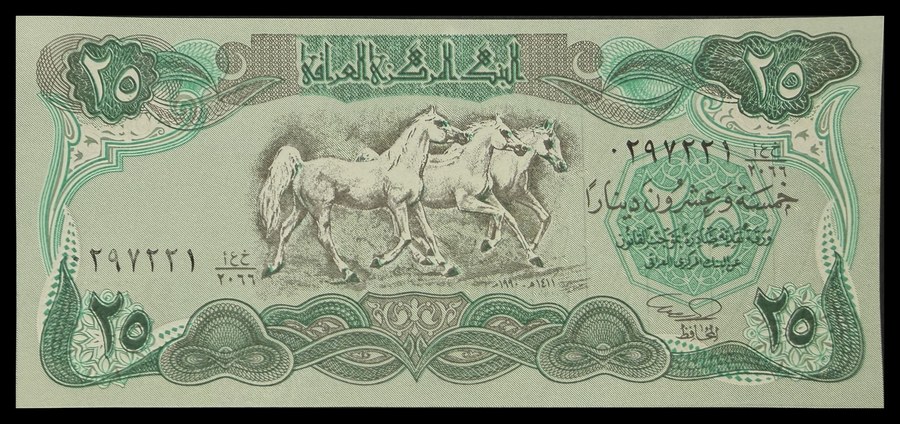
IMG_6698.jpeg
cropped
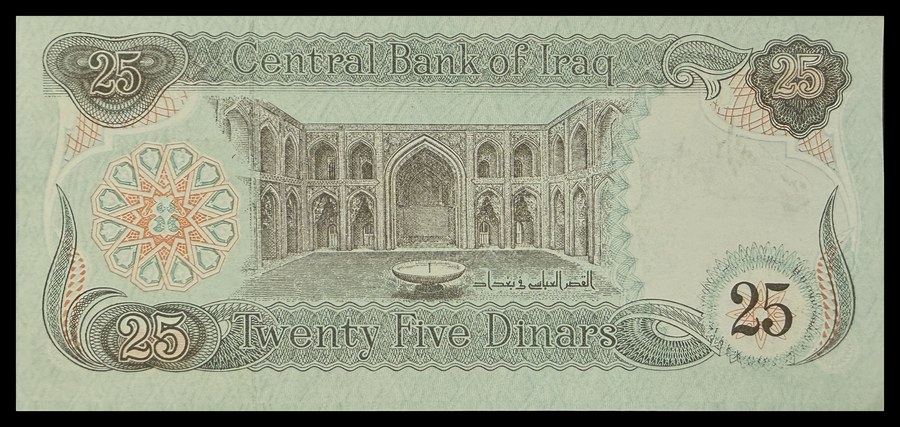
IMG_6699.jpeg
cropped
Where & when
What's on the note
Front: Safe conduct pass issued by the Saudi Arabian Monetary Agency for pilgrims to Mecca. The front features extensive Arabic text providing security instructions and terms of use, with 'SAFE CONDUCT PASS' printed in English on the left margin. These special receipts were issued to Hajj pilgrims from 1953-1956 to facilitate secure currency exchange during the pilgrimage season, representing an innovative early measure by SAMA to protect pilgrims from exploitation and currency fraud.
Back: Two Arabian horses in profile at center, facing right, rendered in detailed intaglio engraving. The Arabian horse is central to Saudi culture and history, having been bred on the Arabian Peninsula for millennia and serving as the foundation for modern light horse breeds worldwide. The denomination '25' appears in Arabic-Indic numerals (٢٥) in all four corners, with 'المملكة العربية السعودية' (Kingdom of Saudi Arabia) inscribed at top center in ornate Arabic calligraphy.
How it was made
Security features: intaglio,microprint
Saudi Arabia in Asia
Saudi Arabia in Asia. Other countries on the same continent shown in muted grey.
Background & history
This is a Saudi Arabian Hajj Pilgrim's Receipt from the early SAMA series (P-10), issued 1953-1956. These special-purpose notes were created by the newly-established Saudi Arabian Monetary Agency (founded 1952) specifically for use by pilgrims during the Hajj season. They served as secure currency receipts that pilgrims could exchange for local currency, protecting them from fraud and exploitation by money changers. The system was discontinued in 1956 when regular SAMA banknotes became widely available. The series included denominations of 1, 5, 10, 25, 50, and 100 riyals. These pilgrim receipts are historically significant as among the first issues of the Saudi Arabian Monetary Agency and represent an early Islamic finance innovation. The horse imagery reflects Saudi Arabia's deep cultural connection to Arabian horse breeding.
Collector references
How it came to me
Note shows typical circulation wear with even aging and toning throughout. No tears or major defects visible. Text remains legible.
What it's worth now
Valuation history (1)
| date | low | high | currency | source | note |
|---|---|---|---|---|---|
| 2026-05-10 09:30:23 | 50.0 | 150.0 | USD | ai | from claude-sonnet-4-5 |
History & extractions
AI extractions (1)
Edits & decisions (0)
No edits yet.
Manual fixups
Find near-duplicates
Manual pairing override
Edit specimen #691
All fields below post to the same save endpoint. Sections collapse to focus on what you need.
Re-crop manually
Drag the four corners to mark the banknote in each image. Click Save crop to apply.