Collection › Japan › #726
100 Yen
P-89
Needs review
✦ AI 88%
The AI flagged these for your attention. Use ✦ Fact-check to cross-check factual fields against another model's world-knowledge, or 🔍 Re-look at image when you suspect the AI misread the pixels.
-
Some fields the AI was unsure about — please verify:
- Issue year: “—” (0%)
- Watermark: “—” (0%)
- Front portrait: “—” (0%)
- Serial number: “—” (0%)
Click ✦ Ask AI to verify or fix any below. -
The photo is blurry.Mark Retake — re-photograph in better focus.
-
Lighting is too dim for confident reading.Mark Retake — re-photograph with more light.
-
Overall AI confidence is 88% (auto-approve threshold is 92%).Skim the Identity tab; the dots next to each field show what the AI was unsure about.
IMG_6768.jpeg
cropped
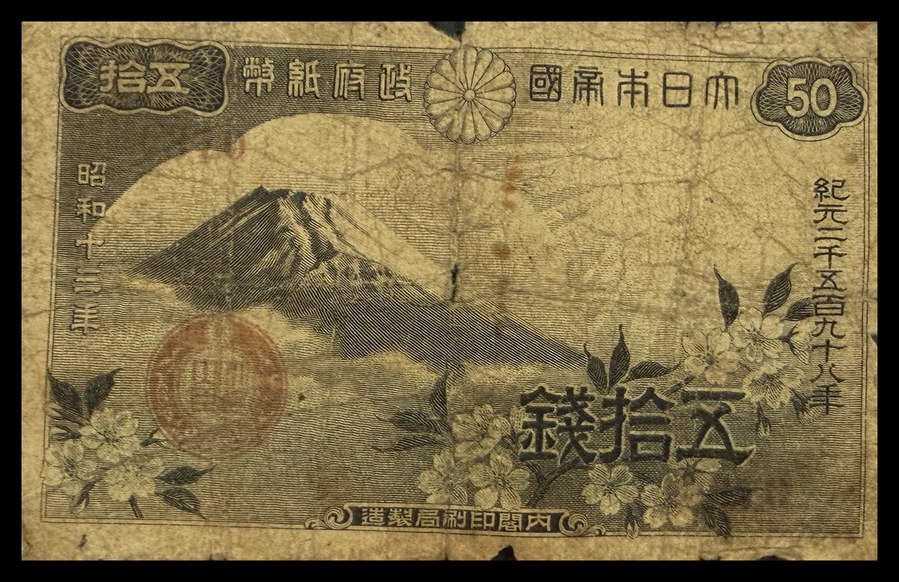
IMG_6769.jpeg
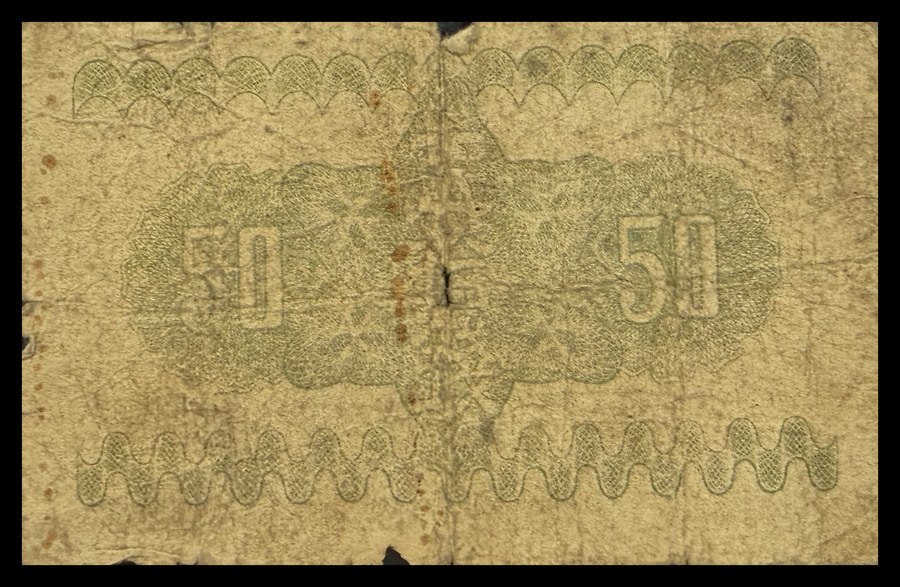
cropped
Where & when
What's on the note
Front: The National Diet Building in Tokyo, completed in 1936 as the seat of Japan's bicameral legislature. The building's distinctive pyramid-shaped tower and neoclassical architecture made it a symbol of Japan's parliamentary democracy and was featured on currency during the post-WWII reconstruction period. The text 'NIPPON GINKO' appears at top with '100 YEN' at bottom.
Back: Mount Fuji, Japan's highest and most sacred mountain at 3,776 meters, depicted with cherry blossoms (sakura) in the foreground. Fuji-san has been a central symbol of Japanese culture and spirituality for centuries, revered in Shinto tradition and featured extensively in Japanese art. The Imperial chrysanthemum seal appears at top center. Vertical text on the right reads the denomination in Japanese characters.
How it was made
Security features: intaglio
Japan in Asia
Japan in Asia. Other countries on the same continent shown in muted grey.
Background & history
This is a Nippon Ginko (Bank of Japan) convertible note from the immediate post-WWII period (1946–1953), issued during the Allied Occupation. These notes were part of Japan's currency stabilization efforts following WWII hyperinflation and economic collapse. The series featured Japanese architectural and natural landmarks—deliberately chosen to rebuild national identity while being acceptable to occupation authorities. The 100 yen denomination was a workhorse note during reconstruction. These notes were replaced by the 1950s series Bank of Japan notes and formally demonetized in 1958. The red seal visible on the front is the Bank of Japan validation stamp. The series is catalogued as P-89 in the Standard Catalog of World Paper Money.
Collector references
How it came to me
Note shows significant circulation with staining, creasing, and edge wear. Paper is intact but heavily aged with discoloration throughout.
What it's worth now
Valuation history (1)
| date | low | high | currency | source | note |
|---|---|---|---|---|---|
| 2026-05-10 09:38:08 | 3.0 | 10.0 | USD | ai | from claude-sonnet-4-5 |
History & extractions
AI extractions (1)
Edits & decisions (0)
No edits yet.
Manual fixups
Find near-duplicates
Manual pairing override
Edit specimen #726
All fields below post to the same save endpoint. Sections collapse to focus on what you need.
Re-crop manually
Drag the four corners to mark the banknote in each image. Click Save crop to apply.