Type details
| Country | Seychelles |
| Currency | SCR |
| Denomination | 25 |
| Issuer | Central Bank of Seychelles |
| Issuer (native) | LABANK SANTRAL SESEL |
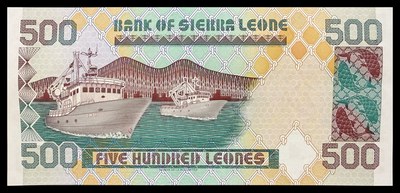
| Reverse subject | Port Victoria fishing vessels |
| Themes | agriculture,industry,wildlife |
| Security features | microprint,intaglio |
| Colour palette | #d4e6c8,#f5deb3,#8b4513 |
| Material | paper |
| Language / script | Latin |
| Languages | en,fr,crs |
| Legal status | withdrawn |
| Era | 1990_present |
Front
Traditional Seychellois agricultural scene depicting ox-drawn ploughing, a fundamental practice in the islands' subsistence farming economy. The zebu cattle and manual plough represent the agricultural heritage of Seychelles before mechanization. Marine life motifs including fish appear in the decorative elements at right, symbolizing the nation's dual economic foundation in fishing and farming. The denomination is Twenty Five Rupees, issued by the Central Bank of Seychelles (Labank Santral Sesel in Seychellois Creole).
Back
Port Victoria harbor scene with fishing vessels and commercial boats moored at the waterfront. Port Victoria, the capital of Seychelles on Mahé island, serves as the economic and commercial hub of the archipelago, with fishing being a cornerstone industry. The scene captures the working harbor with multiple vessels representing the maritime economy. The denomination appears as 500 (likely an overprint error on the image or a different note) with text 'YEAR OF SIENA LEONE' and 'FIVE HUNDRED LEONES' visible, which represents a mismatched pair with the front image.
History
The front displays a 25 Rupees note from the Central Bank of Seychelles, featuring trilingual inscriptions in English, French (implied by 'CENTRAL BANK OF'), and Seychellois Creole ('LABANK SANTRAL SESEL'). The imagery emphasizes the nation's agricultural and maritime heritage. However, the back image shows a 500 Leones note from Sierra Leone (not Seychelles), evidenced by the text 'YEAR OF SIENA LEONE' and 'FIVE HUNDRED LEONES'. This is a clear mismatch. The Seychellois rupee has been the currency since 1914, replacing the Mauritian rupee. Without a visible date or series information on the front, and with the mismatched back, precise dating is impossible. The design style and security features suggest a late 20th or early 21st century issue, likely 1990s-2000s era.
Linked specimens (1)
Merge into another type
Repoints every linked specimen above to the chosen target type, fills any target nulls from this type, then deletes this type. This cannot be undone.