Type details
| Country | Switzerland |
| Currency | CHF |
| Denomination | 10 |
| Series | Eighth series |
| Series year | 1995 |
| Series range | 1995–present |
| Issuer | Swiss National Bank |
| Issuer (native) | Schweizerische Nationalbank / Banque Nationale Suisse / Banca Naziunala Svizra |
| Printer | Orell Füssli Security Printing |
| Front portrait | Le Corbusier |
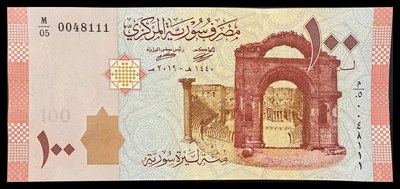
| Reverse subject | Bosra Roman Theatre |
| Themes | architect,architecture |
| Security features | thread, microprint, intaglio, see_through_register, optically_variable_ink, uv |
| Colour palette | #f4a460,#87ceeb,#fa8072 |
| Material | paper |
| Dimensions (mm) | 126x70 |
| Language / script | Latin, Arabic |
| Languages | de,fr,it,rm,ar |
| Pick # | 66 |
| Rarity | common |
| Legal status | in_circulation |
| Era | 1990_present |
| Default value (low) | 10.0 |
| Default value (high) | 15.0 |
| Value currency | CHF |
Front
Le Corbusier (Charles-Édouard Jeanneret-Gris, 1887–1965), Swiss-French architect, designer, painter, urban planner and writer, one of the pioneers of modern architecture. The front features his portrait alongside abstract geometric elements and the Swiss cross, with interwoven colored ribbons representing DNA strands. Le Corbusier is honored on this note for his revolutionary contributions to 20th-century architecture and his influence on urban planning worldwide, including his modular system and iconic buildings like the Villa Savoye and Unité d'Habitation.
Back
The Roman Theatre at Bosra, Syria, one of the best-preserved Roman theaters in the world, dating from the 2nd century CE. Built during the reign of Emperor Trajan, it could seat approximately 15,000 spectators and features exceptional acoustics. The theater is framed by the arched structure of the medieval citadel that later enclosed it. This architectural marvel represents Le Corbusier's interest in classical proportions and ancient architecture, which influenced his modernist principles.
History
This is the eighth series of Swiss banknotes, designed by Jörg Zintzmeyer and introduced in 1995 to replace the sixth series (the seventh series was never issued). The series features Swiss cultural figures on the front and their thematic connections on the reverse. The 10-franc note honors Le Corbusier and his architectural legacy. The series incorporates advanced security features including see-through registers (the Swiss cross visible from both sides), optically variable ink, microprinting, and UV-reactive elements. These notes remain legal tender alongside the newer ninth series introduced starting in 2016. The date printed on the note is 1440 AH (Anno Hegirae, 2019 CE in the Islamic calendar), indicating this is a later printing within the series. Serial number format includes prefix and suffix letters with numerical sequence.
Linked specimens (1)
Merge into another type
Repoints every linked specimen above to the chosen target type, fills any target nulls from this type, then deletes this type. This cannot be undone.