Collection › Indonesia › #310
10 Rupiah IDR
P-P-89
Needs review
✦ AI 90%
The AI flagged these for your attention. Use ✦ Fact-check to cross-check factual fields against another model's world-knowledge, or 🔍 Re-look at image when you suspect the AI misread the pixels.
-
Some fields the AI was unsure about — please verify:
- Serial number: “—” (0%)
Click ✦ Ask AI to verify or fix any below. -
Overall AI confidence is 90% (auto-approve threshold is 92%).Skim the Identity tab; the dots next to each field show what the AI was unsure about.
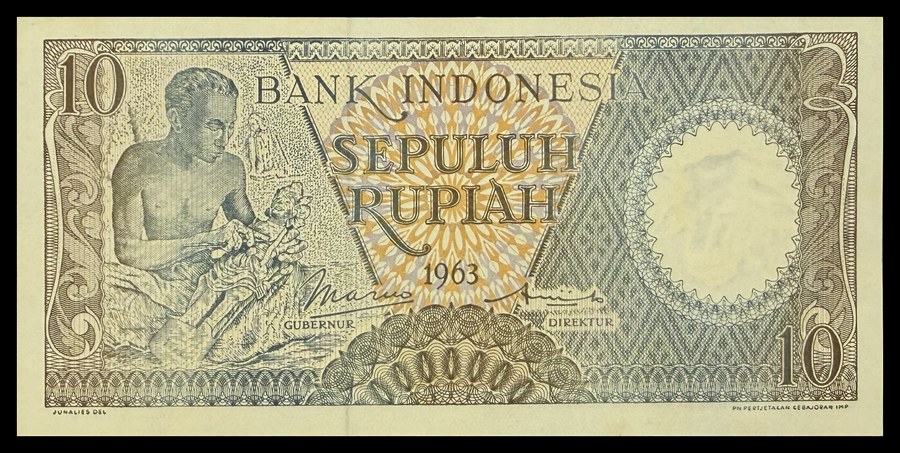
IMG_6670.jpeg
cropped
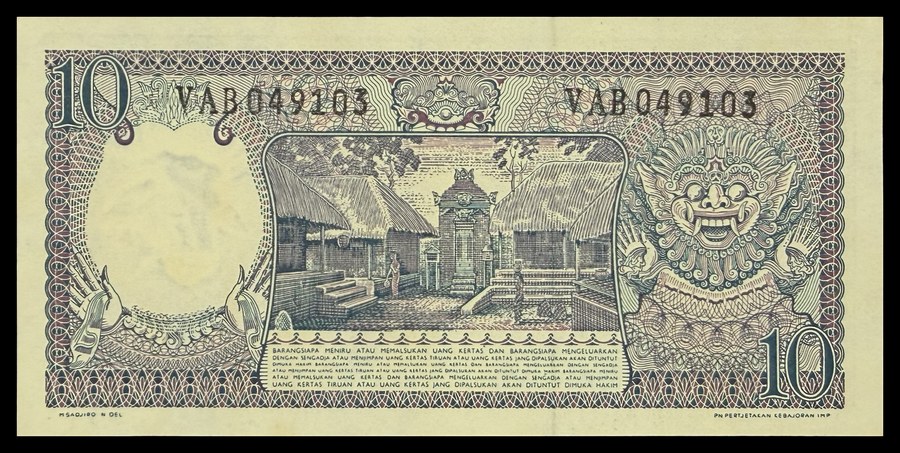
IMG_6671.jpeg
cropped
Where & when
What's on the note
Front: Traditional Indonesian rumah adat (traditional house) with distinctive thatched roof, representing vernacular architecture from the Indonesian archipelago. The structure features the characteristic elevated platform and ornate wooden construction typical of traditional dwellings in various Indonesian regions. The detailed engraving showcases tropical vegetation surrounding the house, emphasizing Indonesia's agricultural heritage and connection to traditional village life. The text indicates this note was issued under the agreement and supervision of monetary authorities.
Back: Indonesian worker engaged in traditional craft, holding a wayang kulit (shadow puppet), one of Indonesia's most important cultural symbols recognized by UNESCO. The worker represents the common laborer and artisan class that this series honors. The wayang puppet connects to Java's ancient theatrical traditions dating back centuries, embodying stories from Hindu epics adapted into Indonesian culture. The denomination 'SEPULUH RUPIAH' (Ten Rupiah) appears prominently with the year 1963, signed by the Governor and Director of Bank Indonesia.
How it was made
Signatures: Gubernur; Direktur
Security features: watermark,intaglio
Indonesia in Asia
Indonesia in Asia. Other countries on the same continent shown in muted grey.
Background & history
The Seri Pekerja (Worker Series) was issued by Bank Indonesia from 1963-1968 during the Sukarno era, designed to honor Indonesian workers and showcase national cultural heritage. This 10 Rupiah note features traditional architecture on the front and a worker with wayang puppet on the reverse, emphasizing Indonesia's cultural identity during the post-independence nation-building period. The series was printed domestically at Percetakan Kebajoran as part of Indonesia's efforts toward economic self-sufficiency. These notes circulated during a period of economic instability and were eventually replaced due to inflation. The 1963 series is notable for its artistic celebration of Indonesian workers, traditional culture, and indigenous architecture.
Collector references
How it came to me
Note shows good overall condition with intact details and moderate handling wear consistent with XF grade
What it's worth now
Valuation history (1)
| date | low | high | currency | source | note |
|---|---|---|---|---|---|
| 2026-05-08 17:39:25 | 2.0 | 8.0 | USD | ai | from claude-sonnet-4-5 |
History & extractions
AI extractions (1)
Edits & decisions (1)
Manual fixups
Find near-duplicates
Manual pairing override
Edit specimen #310
All fields below post to the same save endpoint. Sections collapse to focus on what you need.
Re-crop manually
Drag the four corners to mark the banknote in each image. Click Save crop to apply.