Collection › Guinea-Bissau › #262
50 Peso
P-P-11
Needs review
✦ AI 90%
The AI flagged these for your attention. Use ✦ Fact-check to cross-check factual fields against another model's world-knowledge, or 🔍 Re-look at image when you suspect the AI misread the pixels.
-
Overall AI confidence is 90% (auto-approve threshold is 92%).Skim the Identity tab; the dots next to each field show what the AI was unsure about.
IMG_6573.jpeg
cropped
IMG_6574.jpeg
cropped
Where & when
What's on the note
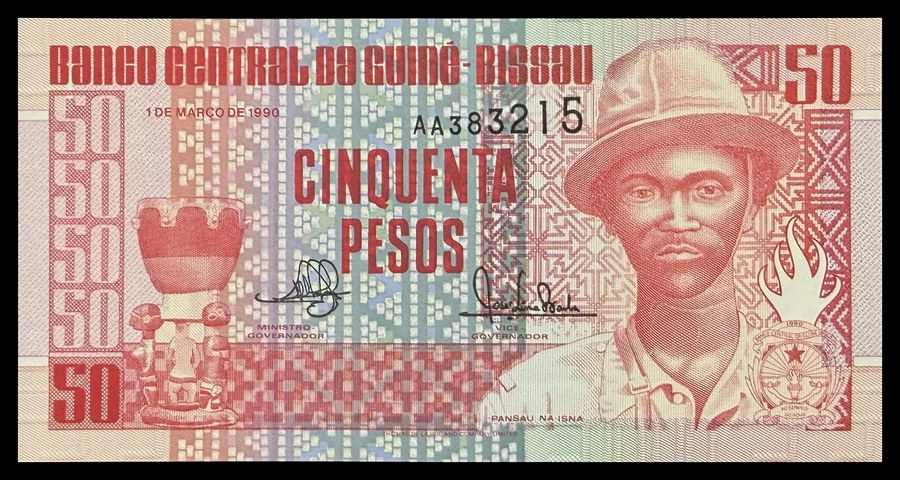
Front: Pansau Na Isna, a symbolic representation of Guinea-Bissau national identity and indigenous culture. The name means 'Our People' in Creole and represents the collective spirit of the nation's diverse ethnic groups. The portrait shows a woman in traditional headdress and jewelry, symbolizing the cultural heritage and strength of Guinea-Bissau's people. The note was issued during the period when Guinea-Bissau used its own peso currency before joining the West African CFA franc zone.
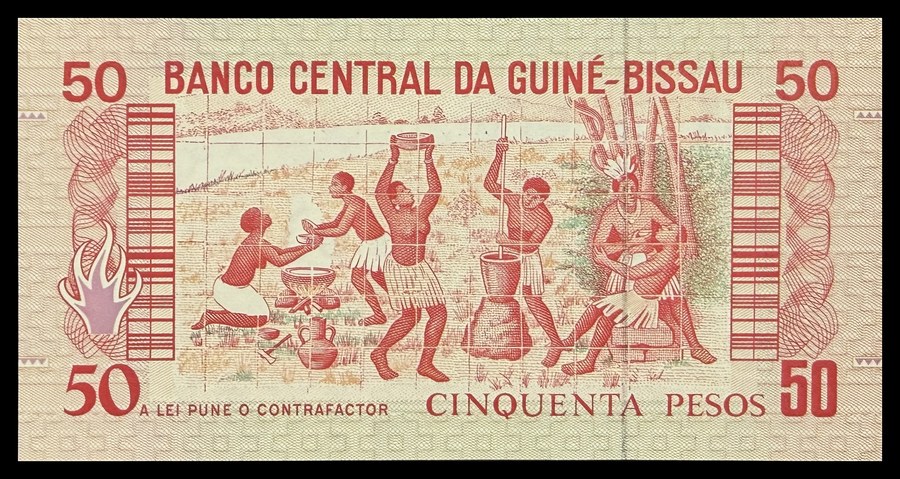
Back: Traditional village scene depicting artisans and craftspeople engaged in daily economic activities including pottery making, grain pounding, and agricultural work. The scene celebrates the traditional economy and cultural practices of Guinea-Bissau's rural communities, showing figures working with traditional tools and engaged in subsistence activities that formed the backbone of the nation's economy. The imagery emphasizes indigenous culture and the dignity of labor in traditional African society.
How it was made
Signatures: Ministro Governador; Vice Governador
Security features: watermark,see_through_register,intaglio
Guinea-Bissau in Africa
Guinea-Bissau in Africa. Other countries on the same continent shown in muted grey.
Background & history
This note belongs to the post-independence Peso series issued by Guinea-Bissau between 1990 and 1997, following the country's independence from Portugal in 1974. The Peso was the national currency until 1997, when Guinea-Bissau joined the West African Economic and Monetary Union (WAEMU) and adopted the CFA Franc BCEAO. The 1990 series featured imagery celebrating national identity, indigenous culture, and traditional economic activities. The date '1 DE MARÇO DE 1990' (March 1, 1990) appears on the note. These notes were demonetized upon the currency changeover in 1997.
Collector references
How it came to me
Note shows minimal circulation with good color retention and sharp details
What it's worth now
Valuation history (1)
| date | low | high | currency | source | note |
|---|---|---|---|---|---|
| 2026-05-08 17:28:53 | 5.0 | 15.0 | USD | ai | from claude-sonnet-4-5 |
History & extractions
AI extractions (2)
Edits & decisions (0)
No edits yet.
Manual fixups
Find near-duplicates
Manual pairing override
Edit specimen #262
All fields below post to the same save endpoint. Sections collapse to focus on what you need.
Re-crop manually
Drag the four corners to mark the banknote in each image. Click Save crop to apply.