Collection › Yugoslavia › #652
5000000 Yugoslav Dinar
P-P-133
Needs review
✦ AI 90%
The AI flagged these for your attention. Use ✦ Fact-check to cross-check factual fields against another model's world-knowledge, or 🔍 Re-look at image when you suspect the AI misread the pixels.
-
Some fields the AI was unsure about — please verify:
- Printer: “—” (30%)
- Watermark: “—” (40%)
Click ✦ Ask AI to verify or fix any below. -
Overall AI confidence is 90% (auto-approve threshold is 92%).Skim the Identity tab; the dots next to each field show what the AI was unsure about.
IMG_7501.HEIC
cropped
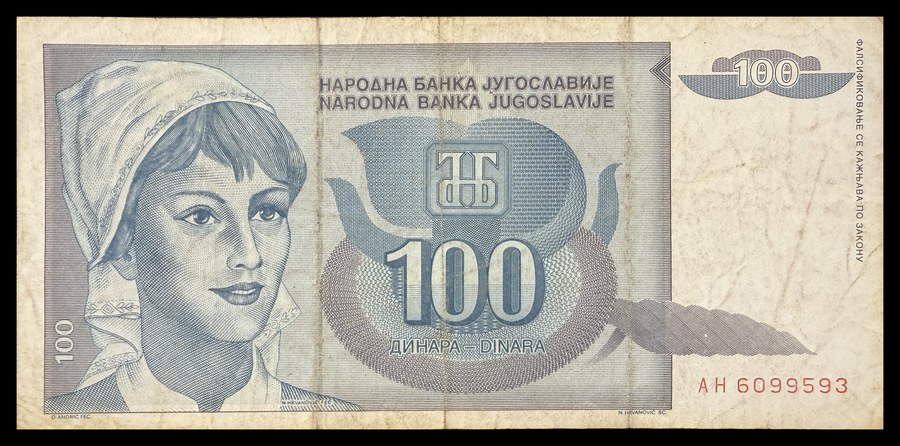
IMG_7502.HEIC
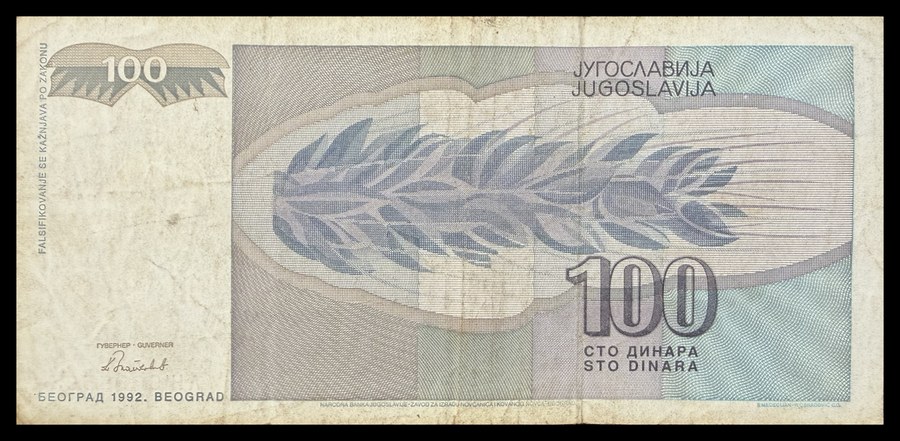
cropped
Where & when
What's on the note
Front: Nikola Tesla monument statue, depicting the Serbian-American inventor and electrical engineer (1856–1943) who pioneered alternating current electricity systems. The monument shows Tesla in traditional Serbian dress with an Orthodox cross visible on his chest. Behind the statue is a depiction of the Đerdap I hydroelectric power station (Iron Gate I) on the Danube River, one of Europe's largest power plants, completed in 1972 as a joint Yugoslav-Romanian project. This note was issued during Yugoslavia's catastrophic hyperinflation period when the dinar lost value at an astronomical rate.
Back: Portrait of a young Serbian woman wearing traditional folk costume and jewelry, representing Yugoslav cultural heritage. The woman wears an ornate necklace typical of Serbian traditional dress. The design emphasizes cultural identity during a period of severe economic crisis and impending national dissolution. Text reads 'NARODNA BANKA JUGOSLAVIJE' (National Bank of Yugoslavia) with denomination '100 DINARA' overprinted on the existing 5,000,000 note.
How it was made
Signatures: Governor: signature visible but name not clearly legible
Security features: microprint,intaglio
Where in the world
Geography unknown for Yugoslavia.
Background & history
This is a critically important hyperinflation note from the final years of Yugoslavia. Printed in Belgrade in 1993 and dated 'BEOGRAD 1993', it belongs to the series issued during one of history's worst hyperinflations. The 5,000,000 dinar denomination itself indicates extreme currency devaluation. What makes this specimen particularly significant is the '100' overprint visible on the back — during 1993–1994, Yugoslavia went through multiple currency reforms attempting to stabilize the dinar, and existing high-denomination notes were sometimes overprinted with new values as emergency measures. The note shows 'FALSIFIKOVANIE SE KAŽNJAVA PO ZAKONU' (counterfeiting is punished by law) on the front. The hyperinflation peaked in January 1994 with monthly inflation reaching 313 million percent. The Yugoslav dinar was replaced on January 24, 1994, by a new dinar at a rate of 1 new dinar = 1,000,000,000 old dinars. This series represents the economic collapse that accompanied Yugoslavia's disintegration. Serial number visible: AH 6099593.
Collector references
How it came to me
Note shows moderate circulation with visible creases, soiling, and wear consistent with use during hyperinflation. Center fold visible. Edges show some fraying.
What it's worth now
Valuation history (1)
| date | low | high | currency | source | note |
|---|---|---|---|---|---|
| 2026-05-10 07:45:59 | 5.0 | 15.0 | USD | ai | from claude-sonnet-4-5 |
History & extractions
AI extractions (1)
Edits & decisions (0)
No edits yet.
Manual fixups
Find near-duplicates
Manual pairing override
Edit specimen #652
All fields below post to the same save endpoint. Sections collapse to focus on what you need.
Re-crop manually
Drag the four corners to mark the banknote in each image. Click Save crop to apply.