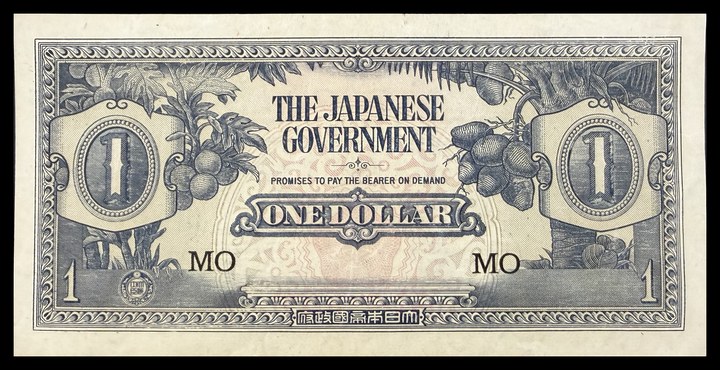
Separate currency date from note date
JPY begins in 1871; Japanese paper money begins centuries earlier; Bank of Japan notes begin in 1885.
The yen began in 1871, but Japan’s paper-money story reaches back centuries.
JPY
Japan’s banknote chronology must not begin with the Bank of Japan’s first note in 1885. Local paper instruments circulated around 1600, the Meiji government issued notes from 1868, and yen-denominated government issues followed the 1871 currency reform.
The Bank of Japan was founded in 1882 and issued its first note—the ten-yen Daikoku note—in May 1885. Modern lettered series begin only after that much longer pre-history.
Dates describe what began in each period—not necessarily when every note stopped circulating.
Yamada Hagaki and later domain notes show that Japanese paper money existed long before the yen.
Dajōkansatsu appeared in 1868; the yen was established in 1871 and Meiji Tsuho notes followed in 1872.
The Daikoku ten-yen note opened the central-bank era, followed by changing convertibility regimes and wartime designs.
Post-war Series A began in 1946. Series B denominations were first introduced between 1950 and 1953.
The date range records when Series C denominations were first issued—not their complete circulation lifetime.
Series D arrived in 1984, the ¥2,000 note in 2000, and Series E in 2004 with upgraded anti-counterfeit features.
Shibusawa Eiichi, Tsuda Umeko and Kitasato Shibasaburo headline the current series; Hokusai’s Great Wave appears on the ¥1,000 reverse.
JPY begins in 1871; Japanese paper money begins centuries earlier; Bank of Japan notes begin in 1885.
For Series B and C, the displayed span covers first issue dates across denominations, not the period all notes circulated.
The Bank of Japan lists many older types that remain valid even though they are no longer printed.
Record series, portrait, serial-number colour, printing authority imprint and legal-tender status.
0 of 48 documented issues represented · generated 2026-07-26
1871-present
P-20
Daikokuten (God of Wealth)
First standardized Bank of Japan note
P-21
Sugawara no Michizane
Scholar and deity of learning
P-22
Wa-ka-no-ura scenic view
Famous coastal landscape
P-23
Fujiwara no Kamatari
Statesman and founder of Fujiwara clan
P-34
Sugawara no Michizane
Revised design with improved security
P-30
Wa-ka-no-ura view
Enhanced engraving quality
P-35
Fujiwara no Kamatari
Updated security features
P-40
Wa-ka-no-ura scenic design
Taisho reign modifications
P-41
Fujiwara no Kamatari
Continued classic design
P-42
Fujiwara no Kamatari
Rare high denomination
P-55
Sugawara no Michizane
Pre-WWII circulation
P-51
Phoenix and paulownia
Traditional Japanese motifs
P-56
Fujiwara no Kamatari
Last pre-war 100 Yen design
P-53
Yasukuni Shrine
Small denomination for inflation
P-59
Yasukuni Shrine
Wartime emergency issue
P-54
Yasukuni Shrine
Simplified wartime design
P-55a
Mt. Fuji
Wartime variant
P-56a
Diet Building
Government symbolism
P-84
Dove
Peace symbolism post-surrender
P-60
Asahi (Morning Sun)
Simplified Allied-approved design
P-85
Ninomiya Sontoku statue
Philosopher and agricultural reformer
P-86
Shotoku Taishi
Prince and cultural hero
P-87
Diet Building
Democratic institution symbol
P-88
Shotoku Taishi
Higher denomination with prince portrait
P-78
Takahashi Korekiyo
Finance minister and statesman
P-89
Itagaki Taisuke
Founder of liberal party movement
P-90
Iwakura Tomomi
Meiji statesman
P-91
Shotoku Taishi
First 1,000 Yen note
P-92
Iwakura Tomomi
Redesigned with enhanced security
P-93
Ito Hirobumi
First Prime Minister of Japan
P-94
Shotoku Taishi
Highest denomination introduced
P-95
Shotoku Taishi
New highest denomination for economic growth
P-96
Ito Hirobumi
Series C design variant
P-97
Iwakura Tomomi
Last 500 Yen note before coin replacement
P-97d
Natsume Soseki
Famous novelist, first non-politician
P-96b
Nitobe Inazo
Educator and author of 'Bushido'
P-97b
Fukuzawa Yukichi
Enlightenment thinker and educator
P-103
Shureimon Gate (Okinawa)
Commemorative for 2000 G8 Summit, rarely used
P-100
Natsume Soseki
Updated security features
P-101
Nitobe Inazo
Enhanced holographic security
P-102
Fukuzawa Yukichi
Advanced anti-counterfeiting measures
P-104
Noguchi Hideyo
Bacteriologist, first scientist featured
P-103
Shureimon Gate
Continued circulation though uncommon
P-105
Higuchi Ichiyo
First woman on modern Japanese currency
P-106
Fukuzawa Yukichi
Continued as highest denomination
Curated profile reviewed 2026-07-29.